Potholes and breakouts
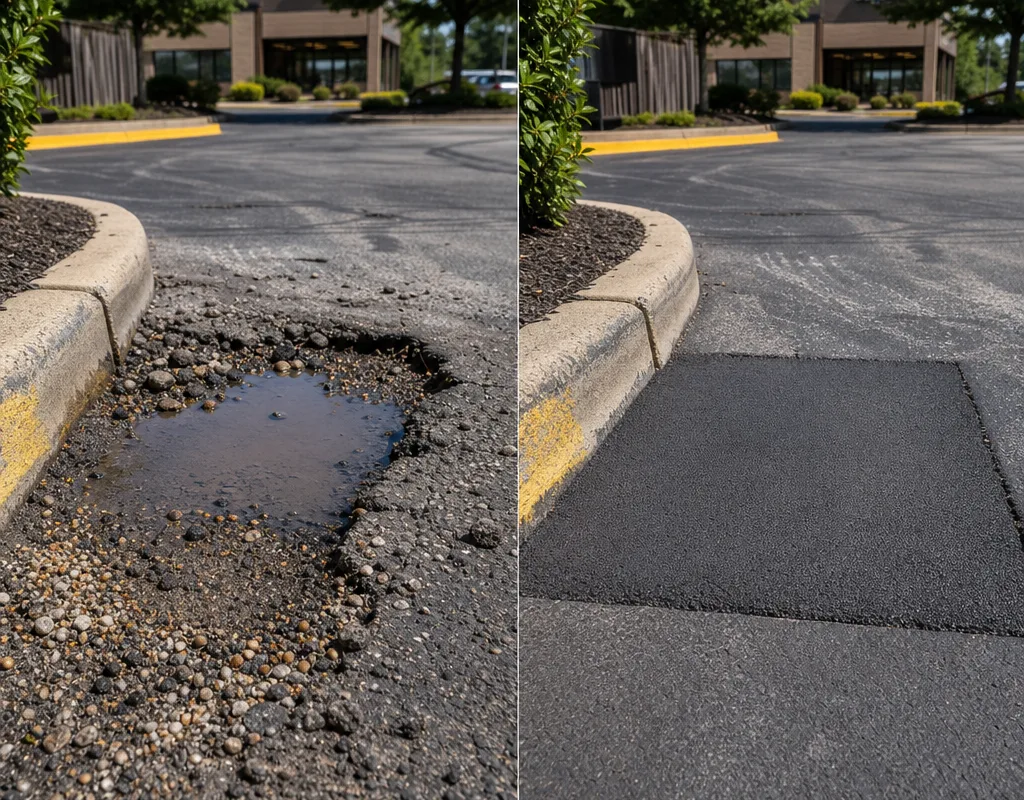
Pothole repair Pittsburgh work is only durable when loose material is removed and the patch is built on stable support. We square up the area when needed, rebuild the base if it is soft, and compact in lifts for a tight patch.
Serving Pittsburgh, Pennsylvania & surrounding areas
Mon–Fri 8am–6pm · Sat 9am–2pm
Fix cracking, raveling, and potholes before water gets underneath and makes the damage spread. Get a clear repair plan for your driveway or parking lot with durable materials and clean edges that blend in.
If you are searching for asphalt repair Pittsburgh property owners can count on, you are usually dealing with one of a few problems: cracking that keeps widening, areas that feel soft or pump water after rain, crumbling edges, or potholes that appeared fast after a freeze.
Asphalt fails in layers. What you see on top is often a symptom of what is happening underneath: water intrusion, base movement, poor drainage, or repeated heavy loads in the same wheel paths. The right repair depends on the cause and the depth of the damage, so we start by looking at the pattern, the surrounding grade, and the condition of the base. Then we recommend the repair that makes sense for the pavement you have today, not an idealized version of it.
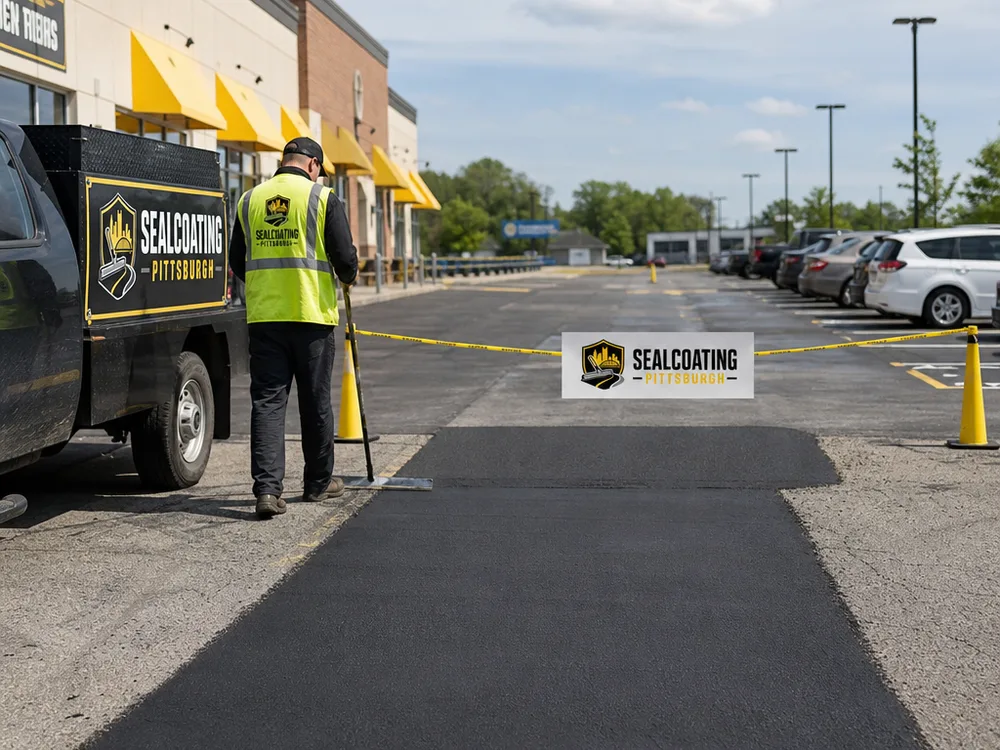
Sealcoating Pittsburgh handles residential driveway repair Pittsburgh homeowners need, along with asphalt patching Pittsburgh businesses rely on for safe, usable parking areas. Our goal is straightforward: restore the surface, protect the base, and leave you with a repair that is cleanly tied into the surrounding pavement.
Pothole repair Pittsburgh work is only durable when loose material is removed and the patch is built on stable support. We square up the area when needed, rebuild the base if it is soft, and compact in lifts for a tight patch.
This spider-web cracking usually points to base failure. Surface filler alone rarely holds. We focus on full-depth removal and patching when the pavement flexes or shows widespread fatigue.
Some cracks can be routed and sealed as part of asphalt maintenance Pittsburgh plans. When cracks are wide, multiple, or showing edge crumbling, a patch or overlay tie-in may be the better fix.
When the surface looks rough and aggregate is coming loose, timing matters. Depending on depth, the fix may be a surface patch, a thin overlay, or a maintenance approach that stabilizes the surface before it unravels.
Standing water speeds deterioration, especially through winter. We correct grades where feasible with patching and transitions so water moves to drains or off the pavement instead of into seams.
Edge failures often need a cutback and rebuild because the asphalt has nothing solid to hold it. We can widen or reinforce edges when the existing pavement is too thin or unsupported.
Pittsburgh gets plenty of freeze-thaw action. When water gets into cracks, it expands as it freezes and pushes the asphalt apart. Once the top opens up, more water follows, and the base can start to move. That is why small cracks turn into potholes quickly on steep driveways, busy commercial entries, and anywhere runoff concentrates.
We look for the source, not only the symptom. Typical contributors include downspouts discharging onto pavement, clogged area drains, poor transitions at garage aprons, and settled trenches from past utility work. If the surrounding drainage is fighting the pavement, the best blacktop repair Pittsburgh crews can install will still have a hard life.
In neighborhoods with tight lots and hillside grades like Mount Washington and South Side Slopes, water moves fast and can cut channels along pavement edges. In flatter, high-traffic retail corridors such as parts of Robinson and along major arterials, constant turning and braking tends to fatigue the surface at entrances and intersections inside lots. We tailor the repair detail to the stress the area actually sees.
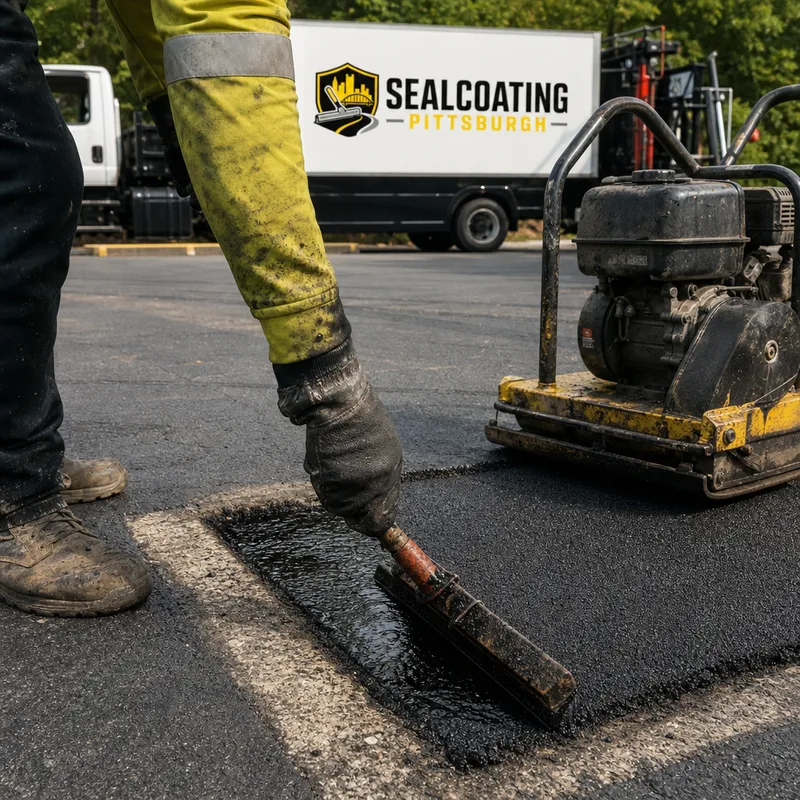 Saw-cut patch preparation
We inspect the damaged areas and the surrounding pavement for cracking patterns, soft spots, drainage problems, and thickness issues. Then we recommend the repair type that fits: crack repair, surface patching, or full-depth patching.
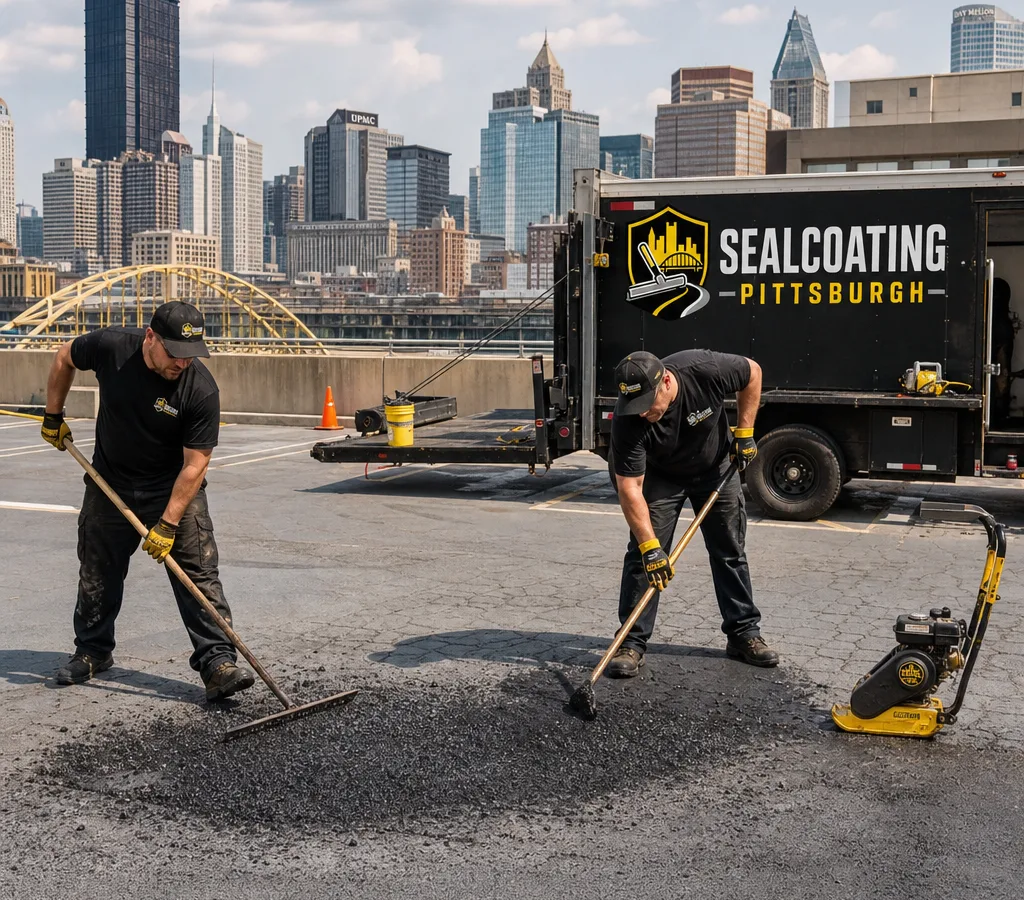
For failed areas, we cut back to sound pavement and remove compromised asphalt and base. If the base is unstable, we rebuild and compact it so the patch is not sitting on a sponge.
We apply tack to bond old to new, place asphalt in lifts where needed, and compact to match the surrounding grade. Compaction is what makes a patch resist moisture and traffic.
We feather and seal edges where appropriate so plows, tires, and water do not peel the repair back. The goal is a patch that drives smoothly and drains correctly.
After repairs, we outline what will extend the life of the surrounding pavement: targeted crack sealing, drainage adjustments, and a sensible schedule for protective treatments. For broader protection, many owners pair repairs with asphalt sealing in Pittsburgh.
Asphalt repair in Pittsburgh typically ranges from about $250 to $1,500+ for common patching and driveway repair work, while larger parking lot repairs and multiple full-depth patches can run $3,000 to $10,000+ depending on scope. Small saw-cut patches and crack repairs sit at the low end; base rebuilds, large failed areas, and heavy-traffic entrances push costs higher.
Final price depends on square footage, depth of failure, how much base work is needed, access for equipment, and whether drainage corrections are required. The exact cost is confirmed after an on-site inspection and a written scope.
Book Your Free InspectionA surface patch replaces the top layer when the base underneath is still stable, while a full-depth patch removes failed asphalt and repairs the base before new asphalt goes in. If the area flexes underfoot, shows alligator cracking, or keeps turning into a pothole, full-depth patching is usually the repair that lasts.
Temporary cold-patch repairs can be placed in winter to reduce hazards, but permanent repairs usually hold better when temperatures allow proper compaction and the area is dry. If you need a safe short-term fix during freeze-thaw season, we can explain what is realistic now versus what should be scheduled when conditions improve.
Many driveway repair Pittsburgh patching jobs can be completed in a day, and light vehicle traffic is often possible after the material cools and sets, depending on repair size and weather. We will give you a specific reopen plan on site, especially if the repair is at the garage entry where turning loads are higher.
Most patch failures trace back to poor edge detail or poor compaction: irregular cutouts, no tack coat, wet material, or a soft base. Clean saw cuts, proper bonding, and compaction to match the existing grade reduce edge separation and plow damage.
Yes. Parking lot repair Pittsburgh projects often focus on high-stress areas like entrances, drive lanes, dumpster pads, and ADA access routes, where safety and drainage matter as much as appearance. We can phase work to keep access open when the lot needs multiple repairs.
Crack sealing is maintenance when cracks are relatively narrow and the surrounding pavement is still sound, because it blocks water intrusion before the base is affected. Once cracking is widespread, edges are crumbling, or the area is pumping water, patching or cutout repair is usually the right next step.
A clean match comes from straight cut lines, correct compaction, and tying the repair into the surrounding grade so it reads as one surface. Color differences between new and old asphalt are normal at first; the focus is making the repair flush and watertight so it performs, then keeping the rest of the pavement maintained.
Tell us what you are seeing, where it is happening, and whether the area holds water. We will inspect the damage, explain the repair options in plain terms, and provide a written scope for your asphalt repair in Pittsburgh.